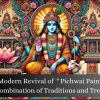
The Unchanging Aura of Pichwai Painting
Pichwai paintings are not limited to a singular focus, for their origins allow painters to come up with captivating visual journeys into the vast and deep cultural and spiritual heritage of India. These seemingly senseless yet meaningful objects have provoked a myriad of different emotions over the centuries and served as a powerful symbol of devotion. From where Pichwai originated to its evolution over time, remain constant queries in the minds of art lovers. This article on the other hand attempts to provide answers and even dwell into the intricate details of the cultural importance of these particular paintings along with their contemporary significance.
The work of art of Pichwai directly translates to deep narrative meaning. The paintings are in one word breath-taking and are considered to be one of the many unique pieces of art that were nurtured in a small town called Nathdwara located in the state of Rajasthan in India. Because of how precious these paintings are the term is derived from the Sanskrit language “wais” which translates to hanging and given how these paintings are used in temples, and homes it is only fitting this term was used. However, it is also important to note that Indians are not the only ones who appreciate such awesome art pieces, in the 17th century the cultures from the western continent were making their way into India.
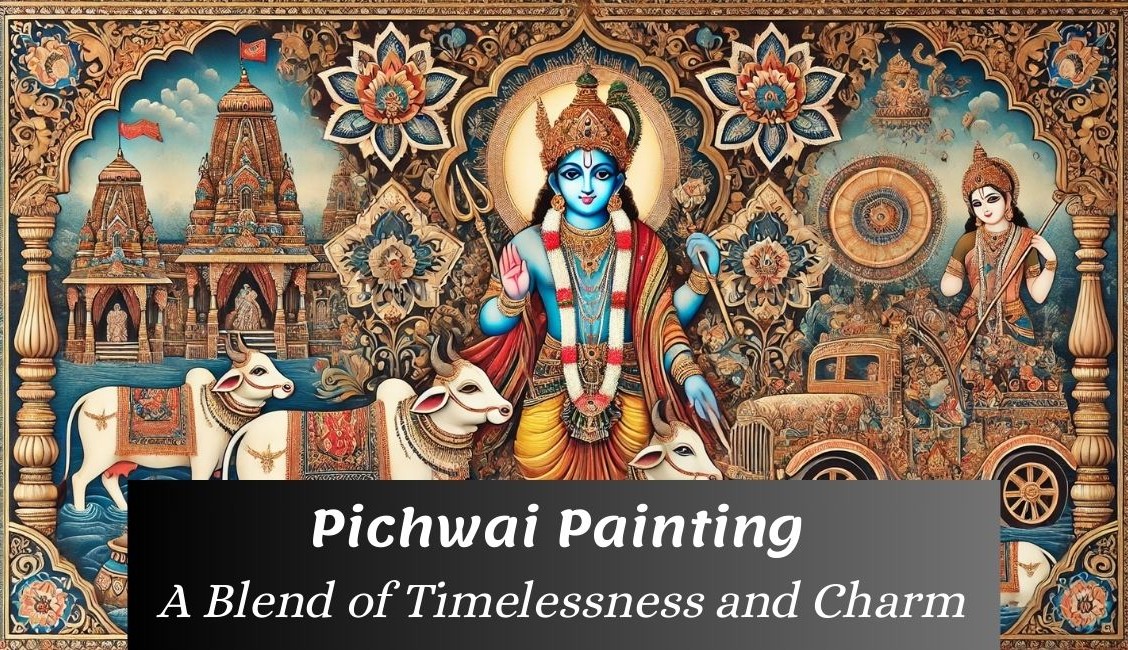
Along with other themes, the life of Krishna has always been the core of Pichwai paintings. Whether it is the Raas Leela, child Krishna’s pranks, or even Govardhan Puja, all have been adored for having some connection to great epics. People draw closer to their beliefs and inner feelings, which in itself brings them devotion to the culture and society with the aid of these paintings.
A Journey Through History
Over 400 years ago Pichwai meaning “backdrop,” comes from the town of Nathdwara located in the royal state of Rajasthan, India. It is famous for these exquisite pieces of art known as Pichwai paintings that are intricately designed and serve as temple decorative hangings illustrating stories and the beauty of Lord Krishna’s life as Shrinathji.
1). Roots in Rajasthan
Pichwai paintings are worshipped in the Nathdwara temple by the devotee of a particular sect of Vaishnavism (called Pushtimarg) and this already has a connection to the shrine of Lord Krishna, Shrinathji. Several stories are painted to showcase the different leelas or divine acts of Krishna, and serve as an important way to practice this form of devotion.
In the beginning, paintings done on fabric were just basic religious illustrations made by temples craftsmen. But today, Pichwai paintings are composed of intricate designs and vivid colours, making it a form of exquisite art to behold.
2). Influence Over Centuries
There was a significant change during the Mughal period, as with many other art forms, Pichwai too went through a drastic refinement. Mughal patterns were added, with new intricate floral designs and plating surrounding the image. The expansion of royal patronage led to an expansion of the art beyond temple walls. It spread to palaces and the households of the rich.
In the hands of a few passionate artists and collectors, Pichwai art’s rich history has enabled it to remain relevant despite lapses of decline triggered by changing economic factors and cultural shifts.
The Cultural Significance of Pichwai Paintings
From a cultural viewpoint, Pichwai paintings are far more than simple decorations— they encompass storytelling, spirituality, and culture. These paintings primarily depict Lord Krishna. They are specifically created for religious purposes, and specific celebrations and festivals. For instance, during festivities like Janmashtami or Annakut, special Pichwai decoration themed paintings are exhibited in the temples. Every Pichwai painting has a unique portraying symbolism and deep meaning. Certain elements like lotuses and peacocks are used in Pichwai painting, where the former symbolizes purity, and the latter represents beauty and spirituality.
Pichwai art not only helps capture the stories of Krishna but also enhances the worship experience for all. Pichwai art showcases the artistic and devotional talent of Indian craftsmen. The stories, techniques, and motifs captured in these paintings are part of our rich tradition and heritage that would otherwise be lost in oblivion. For countless individuals, admiring or owning a Pichwai painting is a fashion for staying attached to the country’s rich cultural and spiritual heritage.
Important Aspects of Traditional Pichwai Paintings
–Themes: The central character of most Pichwai paintings is always Krishna, engaged in different activities like playing his flute, surrounded with cows, or performing Raas Leela.
–Materials and Technique: Artists draw Pichwai images on cloth or paper using natural pigments and gold and silver leaf giving them a three-dimensional and vibrant effect. Pichwai artists resort to the use of old eco-friendly natural materials such as minerals and vegetables in the form of natural dyes, as well as traditional techniques to produce bright and vivid warm colours. A number of Pichwai paintings have gold leaf work for added elegance.
–Costume: Each image is done as Saivite symbol and to tell a story mostly to provide for temple rituals. From Krishna’s garments folds to the veins on a lotus leaves, every single detail is crafted with utmost precision.
–The Form: Pichwais are characterized by symmetrical compositions, outlines, and bright images. They often feature rural landscapes, stories of Krishna’s childhood, as well as seasonal festivities. Pichwai is unique in that its themes are very minimal but the execution is quite intricate.
Work behind a Pichwai painting can be gruelling and time consuming, as it can take weeks or even months. However, it is all worth it in the end as what you are able to create is an absolute master piece. Pichwai’s strong attention to detail, exquisite colours, and devotion expressed in its themes have allowed it to endure the test of time. But where does it stand today?
You May Also Like
Beautiful Painting with recycled material and paints
Beautiful Painting with recycled materials
Beautiful Leather Painting of Arjuna Rath
Sapience – Texture Contemporary Artwork
The Pharaohs – Egyptian Oil Painting on Canvas
Shri Ganesha- Painting A4 size on Handmade Paper Base in Acrylic without frame
Motivational Quote in English – 1 Line – HD Wall Print – Positive Mindset
₹125 – ₹225Price range: ₹125 through ₹225Motivational Quote in English – 1 Line – HD Wall Print – Knowledge Is Power
₹125 – ₹225Price range: ₹125 through ₹225Motivational Quote in English – 2 Line – HD Wall Art – Patience & Positivity
₹125 – ₹225Price range: ₹125 through ₹225Motivational Quote in English – 1 Line – HD Wall Art – Consistency & Success
₹125 – ₹225Price range: ₹125 through ₹225Pichwai Art Within the Contemporary Era- Adaptations
The Pichwai is a celebrated Indian style of painting that dates back several centuries, and its unique features are still in vogue today. Recognition of Indian art in the world has turned Pichwai into a highlight. Artists have been encouraged to make it more widespread while conserving its natural beauty. Trends such as boho-chic and traditional-meets-modern interiors have greatly impacted the home decor industry at large. Modern Pichwai is being incorporated into our house decor today but changes are made while being respectful to where it came from.
Clean Modernism: There is a trend of cleaner minimalist designs with Pichwai themes combined with contemporary art. Various elements and components of contemporary art are now merged beautifully in the themes of Pichwai art.
Fusion: The younger generation is excited by the fresh elements of abstract art being turned into Pichwai. New Pichwai art is not usually done on cloth or paper like before but rather on paintings canvases and even printed textiles in the recent trends.
Sometime in the last few decades, young artists have adopted Pichwai style painting and brought it into a renaissance. They have transformed it into something new by altering conventional styles and including modern features such as simplified shapes, brighter colours, and using new techniques.
Modernize and Renew the Legacy of Art
Various individual curators and groups are putting in efforts to ensure that this art form does not disappear. Adaptations of Pichwai with a modern twist focus on size – smaller canvasses are more popular – as well as urban-style colour schemes. Global awareness of Pichwai is being fostered through the use of new techniques like publicity campaigns, art exhibitions, and even workshops. Pichwai paintings now attract interest from individual and institutional art collectors and art lovers from all walks of life. These works of art can adorn every art lover’s gallery and private setting owing to their universal artistic appeal embedded with rich cultural heritage.
As a subtype of Indian art, Pichwai painting is more exclusive than that since it serves as a cross link between the traditional and the modern, a marking of devotion, and a representation of diverse India. Every piece of Pichwai art stirs the heart and inspires an immense amount of respect, whether it is displayed in a temple, hung on a wall, or showcased in a museum. This legacy is something that has to be cherished. The moment people support Pichwai artists, the moment people care to learn about its history and share its stories, it ensures that this art is available for centuries to come and inspire lives in a multitude of ways.
How to secure a Pichwai Art Piece?
For individuals who want to purchase Pichwai art or intend on preserving it, here are some suggestions:
-Original Work is King: Examine if the detailing is finely done, and the colours look natural in the piece set on sale. These will ensure that the work is not misleading.
-Handling with Care: Artworks on delicate materials require skilful preservation methods. Avoid storing near places with high humidity or direct sunlight. Safeguard the work of arts from moisture and water
-Get advice from professionals: Art historians and art galleries that market Indian art are the perfect destination for guidance when looking for these pieces. There are various ways to preserve the masterpieces from getting damaged and particular methods can be followed in this context in order to preserve the art.
Familiarize Yourself with the Lightman Work: Traditional Pichwai employs the use of naturally derived dyes and outlined hand paintings. In contrast, printed copies Pichwais are mass produced.
Besides beauty, when you hang a Pichwai painting in your house, you are essentially adding India’s blend of rich artistry and culture into your daily life. Every stroke of the brush has a tale to tell. Every hue is a reminiscence of the culture. If you are yet to acquire a Pichwai painting, now is an ideal opportunity to introduce it into your environment. You can begin with contemporary versions or embrace deep traditions and take the plunge. Whether you are an avid collector or simply looking to decorate a house, it is very clear that this art form manages to blend antiquity and modern techniques seamlessly. There is no charm it cannot possess.


Add comment
You must be logged in to post a comment.