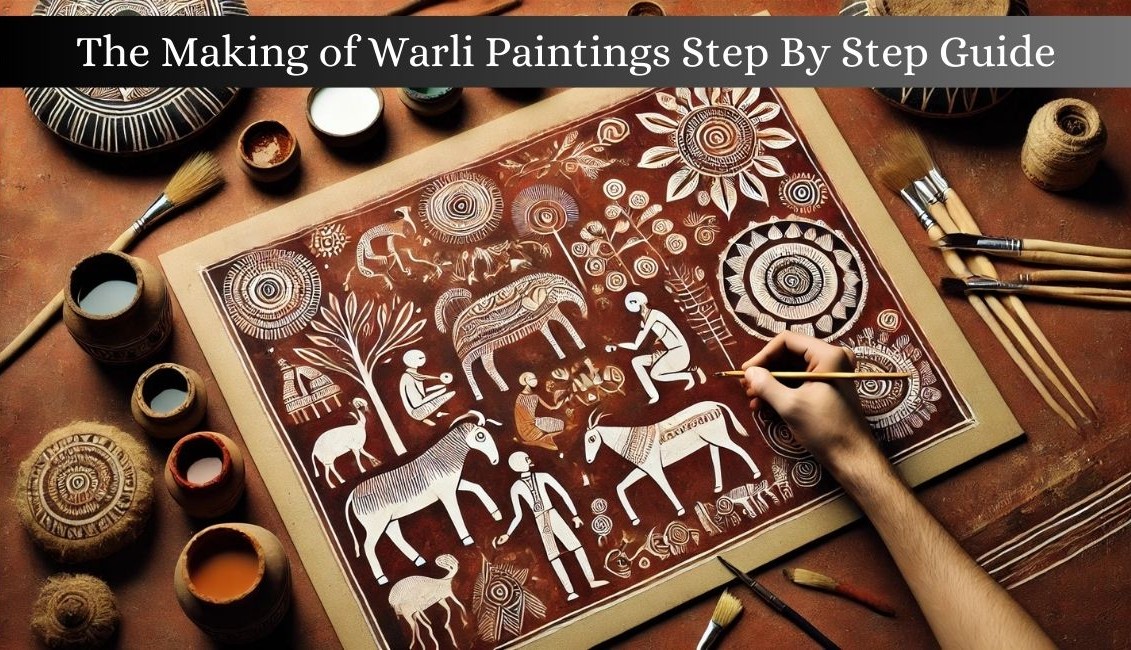
The making of Warli Painting-Step by Step guide
Have you ever thought about the beauty that some tribal art encompasses? Warli painting, which originates from the tribal regions of Maharashtra in India, is both eye-catching and very artistic. Whether you are an artist who is fascinated in cultural themes or an amateur DIYer planning your next project, here is a comprehensive guide about Warli painting from its history to creating one on your own.
What does a Warli painting depict?
Painting Warli is the one form of performing art which can be said to depict the life of the Warli tribe. This is one of the most acclaimed indigenous folk cultures of India, and is been drawn from the Warli tribal people who reside in the Sahyadri ranges of western India. This type of Folk Art is believed to have developed around the 10th century AD where it served to add decorative features on the walls of mud houses during important events like marriages and harvest celebrations.
Unlike in modern art, where we have highly detailed and colourful illustrations, Warli art relies on the painting of simple forms using basic shapes like triangles, lines, circles, and squares that depict tribal life, nature, and the religion. The Warli people’s paintings define their link with nature, their community, and their deities. Like all other forms of art, paintings are not mere visuals but life in an artistic form and Warli Paintings serve this purpose pretty well.
Materials and tools you will need
Earlier, in olden times, various natural materials were used in the making of Warli artform but times there have been many adaptations. The natural materials used in ancient times were –
Canvas: Walls made of mud and coated in cow dung
Paint: A paste created from powdered rice, water, and glue
Paintbrush: Bamboo sticks that were chewed at one end to form a sharp tip Modern Alternatives for Beginners Now, it is much easier to make Warli art. There is no need to attempt to gather cow dung or chew bamboo sticks.
Here is a more contemporary approach to how you can get started from your home:
Canvas: Brown craft paper, handmade paper, or even canvas boards
Paint: White acrylic paint or gel pens
Brush: Fine-tipped paintbrushes
Extras: A pencil and eraser for sketching, and a ruler to help out with accuracy
How to create your own Warli artform
Step 1: Prepare Your Canvas The first step is to start with a tan background that resembles the earthy tones of traditional Warli art. If you are using a blank white piece of paper, paint it a rough brown shade to enhance the authenticity. Make sure to leave this base layer to dry before moving on.
Step 2: Sketch Your Design With the help of a pencil, gently draft your design to portray what your painting would look like. Have you ever thought about what to portray in Warli art? The answer is your daily life, like dancing tribesman, animals, trees, and even a harvest scene.
Do not forget that Warli painting revolves around characters and plots, so make sure to develop a compelling story to go along with your piece of work.
Step 3: Follow the Geometric Foundations
Triangles for bodies, circles for heads, limbs and further details as lines – and at its fundamental level, Warli painting is simply geometry. Use Warli art as an inspiration to keep things straightforward.
Step 4: Paint with Accuracy
To improve the look of your painting, rest on your outline and use white paint, preferably acrylic or gel pens. A fine brush must be used, since the goal is to keep the lines sharp and tidy. Don’t worry if you make a blunder, as adjustments can also be made while drawing the outline.
Step 5: Add Details
Add finishing touches to the painting by adding fine details like dots or dashes that will fill voids in the painting. These details will increase the beauty of the painting and set it apart from the ordinary.
Step 6: Sign Your Name and Add a Personal Touch
If you used acrylic paints, place it behind clear varnish to ensure extra safety. Built with the finest quality materials, it is suitable for display on a wall or as a gift to someone passionate about art.
You May Also Like
Inspirational Quote by Swami Vivekananda in English – 1 Line – HD Wall Art Print – Effort & Growth
₹175 – ₹275Price range: ₹175 through ₹275Sapience – Texture Contemporary Artwork
Motivational Quote in English – 1 Line – HD Wall Print – Knowledge Is Power
₹125 – ₹225Price range: ₹125 through ₹225Positive Quote in English – 1 Line – HD Wall Print – Positive Vibes Only
₹125 – ₹225Price range: ₹125 through ₹225Inspirational Quote by Swami Vivekananda in English – 1 Line – HD Wall Art Print – Arise, Awake & Achieve
₹175 – ₹275Price range: ₹175 through ₹275Inspirational Quote by Rumi in English – 1 Line – HD Wall Art Print –You are not meant for crawling
₹175 – ₹275Price range: ₹175 through ₹275Inspirational Quote in English – 2 Line – HD Wall Print – Knowledge & Growth
₹125 – ₹225Price range: ₹125 through ₹225Motivational Quote in English 1 Line – Great Things Never Come from Comfort Zone – HD Wall Art Print
₹125 – ₹225Price range: ₹125 through ₹225Inspirational Quote by APJ Abdul Kalam in English – HD Wall Art Print – You Have To Dream
₹175 – ₹275Price range: ₹175 through ₹275Positive Quote in English – 1 Line – HD Wall Print – A Sweet Friendship refreshes the soul
₹125 – ₹225Price range: ₹125 through ₹225Popular themes, Shapes and their Interpretations
Like other tribal paintings, Warli art is no exception to bear various motives. Different images are embroidered capturing their stories, values, and notions. Here are some of the common pictures and their interpretations:
Sun and Moon
Life and time are rhythmically depicted in Warli paintings, perfecting the balance between beauty and nature, which is why sun and moon are so pivotal in depicting it.
The Tarpa Dance
Each figure tries to imitate the other and, as they do, they increase their pace and step over each other to grab each other’s poles. The Tarpa dance is motivated by the heart of a dancer. Trees and Wildlife Warli art is about life and in this case the life of the trees, animals, and birds means how much the tribe respects and values Nature and highlights their way of life.
Warli artform incorporation in everyday lives
The depiction of men and women engaged in cultivation, cooking, and feasting is indicative of the ordinary rural way of life, and its vibrancy is reflected in such artworks. Modern Interpretations and Innovations The contemporary artist has no limitations to keeping this ancient art form to clay house walls. Today one can find Warli sculptures and paintings on fashionable clothes, home furnishings, and even digitally designed works of art.
Urban Adaptations
With the rise of modern civilization, Warli inspired wall paintings and murals are commonly seen in cafes, restaurants and public walls in busy cities and towns. DIY Revolution Urbanization and the culture driven by social media platforms like Instagram have tremendously popularized this tribal art among the DIY fans and lovers. For example, tote bags and coasters have become the most popular souvenirs when it comes to handicrafts.
Designer Collaborations
Famous fashion and design brands are now using Warli motifs on their garments, furniture, and even ornaments. Warli on the World Stage With its International Museum, International Art Gallery, and International Science Academy and many others have made Warli Art popular across the globe. Some of them are: Museum collections of Warli art are part of The British Museum and the National Gallery of Modern Art in India.
Global Events
Warli artists’ work has been featured in the Venice Biennale and in art fairs all over the world. The artform has become popular in many ways in many countries all around the world.
Sustainable Impact
Warli art has become a medium for NGOs to help tribal communities gain sustainable livelihoods while preserving the art form. The most striking feature of Warli painting lies within its simplicity and charm. In a time where art is usually sophisticated and digital, this craftsmanship brings back the fresh air of ancient times where beauty lies in its essence. A Warli painting is more than just a piece of art. It is a linkage to the culture, a connection to history, and a form of life connected with nature.
Why not try it yourself? Pick a story and create a picture and see where your mind wanders. Have you attempted your own Warli painting? We want to see! Share your art on social media with #MyWarliStory. You can also sign up for local workshops to hone your skills further.


Add comment
You must be logged in to post a comment.