Understanding the Craft and Importance of Pattachitra Art

Have you ever seen a piece of traditional art and been curious about the story behind it or the artist who made it? Well, if you are mesmerized by elaborate patterns, unique colour palettes and history, you are invited to step into the world of Pattachitra which is one of the ancient and most esteemed art forms of India.
Introduction
Pattachitra paintings are creation with a combination of skill and storytelling which is deeply rooted in the fabric of human civilization. These paintings reflect a perfect blend of imagination and memorization of ancient tales. If you are an art lover or a cultural enthusiast or have an iota of curiosity related to traditional handicrafts, this blog will make you colourful and explain the how and why of Pattachitra.
Here’s everything you need to know regarding the advanced stage of adornment of Pattachitra paintings, its origins that is drown into myths, and its painstaking processes.
Key points regarding the history of Pattachitra
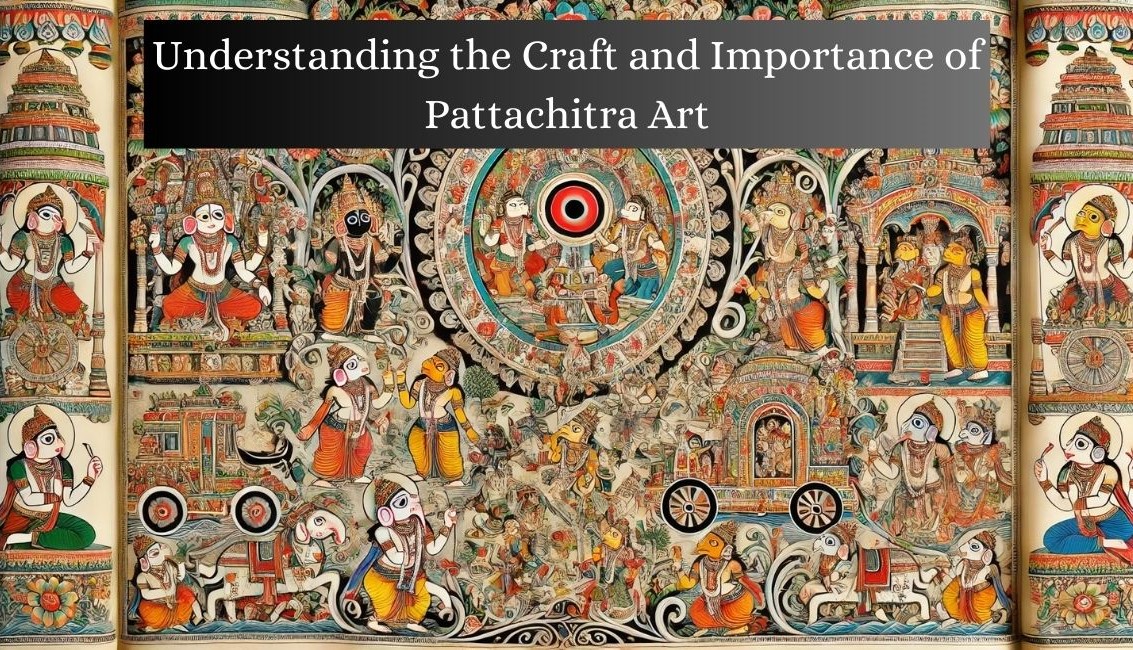
Pattachitra which originates from the words “cloth painting” can be traced back to over a thousand years in Odisha and West Bengal in India. These paintings mostly revolve around the life of Hindu deities and especially Lord Jagannath, an avatar of Lord Vishnu, along with God and Goddess of monsoons as well as other fictional elements in the Ramayana and Mahabharata.
In the beginning Pattachitra was an art to serve religion which was practiced by priests and storytellers in temples to explain sacred stories. Focusing on the Pattachitra paintings, let us first break down the term: patta means a cloth of a particular kind, while chitra resembles picture in meaning. Thus, Pattachitra encompasses both art and religion, alongside being revered for its storytelling value.
Pattachitra’s relevance in today’s world proves how effective and important traditions can be even in the ever-changing world. Pattachitra is more than just a style of painting – it’s living heritage.
The making of Pattachitra painting
Pattachitra artwork is not your average piece of art work. It takes time, as well as, skill and a depth understanding of some ancient methods. The process of creating pattachitra paintings is what makes it so exceptional. Pattachitra paintings are crafted with tenderness, devotion and skill.
1. Preparing the Canvas
The cotton canvas is made sturdy enough for the pattachitra paintings by being treated with tamarind seed paste and chalk powder. This treatment allows for intricate paintings to be done on the canvas ensuring life to be fairly easy. Once the tamarind seed paste and chalk powder are mixed and applied, the cloth dries making it much easier to paint on.
2. Sketching the Design
After gathering appropriate ideas and drawing inspiration from nature, the artist uses a pencil-like instrument A& sketching the designs onto the painting. The initial steps of the painting are the fine brush strokes that create an outline. Outline and Sketches of the paintings contains metaphors, stories and elements from traditional folklore and mythology. Some pattachitra artforms also depict the sequence of the story scene by scene in one painting.
3. Adding Vibrant Colours
The sketches are filled with life and are coloured using organic paint from stones, plants, minerals and shells. Pattachitra paintings are characterized by predominant colours such as white, which is derived from conch shells, red, blue, yellow, and black. Each colour has a symbolic meaning.
4. Accessory and Detail Work
Every work, like the famous saying goes, has a divinity and a devil, and it is this addition or elimination of work which makes or breaks the final output. Each stroke detailing everything, from creating expressions to floral designs on the borders is done using a careful hand-held brush. Artists ensure that every stroke made, has symmetry, precision and matches with the larger portrait.
5. Final Touches
To finish off the painting, a durable, coated film of lacquer is applied to protect it while also adding a shine to it. Thanks to the process of lacquering Pattachitra, which makes it shiny and waterproof making the illustrations which can be enjoyed for centuries.
Materials and tools used
The art of pattachitra relies on built handmade materials, making them unique, and having Pattachitra stand apart from other paintings. Let us take a look at what goes into this ancient craft:
Canvas: A film of natural ingredients placed over the thick cotton cloth.
Brushes: Brushes made by hand or readymade brushes for detailing using animal hair.
Colours: Pigments from trees and rocks.
Tamarind Paste: Used to paint the canvas.
This devotion to organic materials aids to amplify the sustainability aspects and ensure the traditional methods are preserved.
Pattachitra themes and style
Pattachitra contains a collection of different themes and styles, each one telling a different story and showing the myriad emotions and inspiration of the artist.
Mythological Narratives: The stories that influence Lord Jagannath and the Ramayana of Mahabharata boast significance.
Temple Art: It can be seen in the decor of intricate carvings and murals of temples such as Puri Jagannath Temple.
Folklore and Nature: As with other places, birds, flowers, and other symbols are emblems of beauty.
Regional Variations: While Odisha’s Pattachitra keeps to mythology, Bengal’s Kalighat Pattachitra has a social dimension.
Pattachitra’s role in contemporary art
Pattachitra is conventionally seen as an ancient art style; however, Pattachitra’s purpose has shifted to being incorporated in clothing, home decorations, and even online artwork. There are many popular artists who in Pattachitra depicts contemporary global culture through traditional styles. As a result, Pattachitra has become increasingly popular in exhibition markets around the world, making it a cherished piece of Indian culture. The role of this artform has therefore increased gradually in the contemporary art and its contribution in the world of art is inevitable.
The artists and communities behind Pattachitra
Communities dominate the art of Pattachitra to regain sustenance. The village of Raghuraj Pur in Odisha is still a centre of the craft and it is a home to communities of families who have devoted themselves to the art of Pattachitra. Artist families like the Pattas who reside in Raghurajpur have been doing this for years, passing down the skills within the family. This dedication has ensured that along with the sustenance of their art, the people of the region’s cultural heritage also survive. this village is located near Puri in Orissa and is popular for its rich cultural heritage. It is also famous for its other traditional artforms like wood engraving, wood toys etc.
Where to buy and view Pattachitra artforms
Would you like to witness the creative process of this art form? If you answered yes, here are several options to experience Pattachitra’s forte or have one for yourself.
Raghurajpur Heritage Village (Odisha): Here you will find a live museum with many artisans portraying Pattachitra at every street corner.
Exhibitions: Keep an eye out for new cultural expo or art fairs featuring Indian crafts both nationally and abroad.
Online Marketplaces: Pattachitra items can be found on Etsy and various other online marketplaces specially dedicated to crafts.
When you buy Pattachitra, you are supporting the artists which in turn support the existence of phenomenal traditions.
One Legacy at a Time and One Stroke at A Time
Pattachitra is not just a painting but it encompasses a whole story that speaks volumes about the culture and history of the land. It inspires us to take pride in our heritage and the skills possessed by us. To maintain and encourage age old traditional art forms like Pattachitra is not merely important for a culture but for defining and linking different generations as well as nurturing sustainable craftsmanship. So, the next time you see a Pattachitra, take a moment to appreciate and respect the story it tells. Even better, help an artisan and go to the heritage sites where this art is still alive.
Would you like to explore more of traditional Indian paintings? If yes, do share this post with your art fanatic friends, and do not forget to follow our blogs to get more informative posts.


Add comment
You must be logged in to post a comment.