Warli Painting-Exploring its legacy and development as an Indian artistic icon
Have you ever been fascinated by Warli’s rhythmic stick-figure paintings? This form of painting has an underlying story of a tribal tradition that along with its beauty is powerful enough to stand the test of time. For lovers of art, culture, and history, the tale of Warli painting is a tale of imagination, continuity and evolution.
So, let’s together explore the origins, techniques, cultural influence and the revolutions modern Warli art has undergone. You will discover that the art of Warli painting is an integral part of the world’s artistic heritage and the reason it continues to be relevant to this day.
A Peek into Warli painting
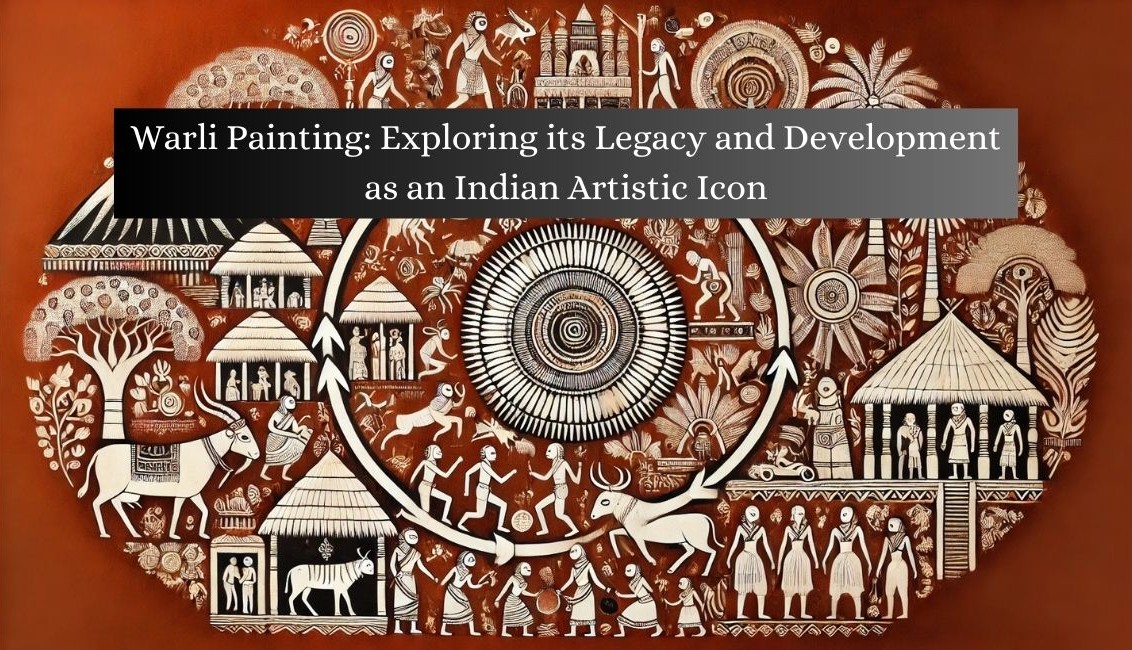
Warli painting is a form of folk painting practiced in the Warli tribes in the state of Maharashtra in India. This peculiar art form comprises of eloquent and straightforward visual art that transcends each tribal art’s simplistic decorative purpose: it is expressive and Its purpose is deeper as it narrates daily life, customary practices, and the intimate relationship humans shared with nature in a tribal setting.
Using basic geometric shapes like circles, triangles, and lines, Warli art captures great themes such as marriage rituals, celebration of harvest, and everyday life in a village. For centuries, it has served as a tool of expression for a tribal community that, through vast portions of its history, did not have any form of written language. But beyond visual appeal and functionality, Warli painting is a culturally rich artistry that is a gateway to a unique world that finds grandeur in minimalism. This visual form of storytelling called Warli painting has its roots in the rural parts of India. Art form preservation is tantamount to preserving part of the country’s cultural richness. The Origins of Warli Painting Warli is said to have been established in 2500 BC. This wall painting style was first done by the Warli tribe which is predominantly found in the Sahyadri Hills of Maharashtra.
Mediums and Canvases: The early Warli art was executed on mud walls smeared with cow dung and red ochre, white rice paste mixed with water served as the medium.
Themes and Motifs: Human relationship with nature was what Warli painting emphasized, from sowing seeds to elaborate celebrating figurines. Warli art glorified life in its most unrefined and natural state.
Symbolism in Simplicity: Each Warli linear geometric figure, although simple, had very deep meanings, for instance, triangles depicted trees and mountains, the sun and moon took the form of circles, with lines crafting stories into transcendental shapes.
Such primitive forms of Warli art captured people’s imagination for centuries before written language became widespread in these societies. Essentials of Warli Painting Warli has retained its sophisticated and instinctive style which has set it apart from other paintings.
The earthy quality of Warli Art captures the imagination of both artists and spectators.
Elements that define Warli art
Geometric Shapes: This kind of art is composed of circles, triangles, and lines. The combination of their shapes and forms is often nature or environment driven, which yields beautiful results.
Colour Palette: In Warli art, the basic motifs are painted in white colour, while the background is made of red, brown, or ochre. The colours were originally derived from mud walls.
Scenes: Farming, dancing rituals, hunting, tribal festivals, and deity worship are some of the common themes. Most Warli paintings are dynamic and exude energy and rhythm.
The Technique
The stunning artwork of Warli defies the beauty of its creation and involves a stepwise sequential technique:
-Preparation: The canvas is a mud wall which is coated with cow dung interspersed with mud.
-Rice Paste: White is obtained from grounded rice mixed with water and gum.
-Hand-Drawn Masterpieces: Bamboo sticks are used to paint delicate patterns and designs with pudding. No instruments like rulers, compasses, or modern gadgets are used, only hands, creativity, and nature. Colours are natural derived from mud, rice powder and flowers though in modern times many adaptations have been done.
The cultural significance of Warli painting
Warli art has been an integral part of Indian culture which serves as a visual representation of people’s lives and places. It serves as a medium of expression, but with great importance behind it.
1). Association with tradition
Warli paintings were traditionally executed in significant events like weddings, harvesting, and special festivals.
Some people, for example the dancers of Tarpa, practiced togetherness through rituals.
2). Community Expression
The essence of Warli art illustrates an interconnected web of community life and associations with nature. With deep-rooted meaning within tribal cultures, these paintings often serve as a form of visual communication.
3). A Tool for Preservation of Culture
For the Warli tribe, Warli painting has become a means of tradition that has bridged the current generation with the past, thereby preserving their identity in modern times.
From walls to galleries- The modern evolution of Warli art
It is no doubt that modernity has affected Warli art, but it is still while retaining the original values. Now, Warli has departed from the traditional earthen walls that sheltered her, to thickets of paper, wood, and cloth, responding to the demands of modern civilization. Social media and digital design software have propelled Warli beyond the boundaries of rural India. It is now used in fashion, stationery, household items, and digital art, highlighting its adaptability and enduring beauty. While some new adaptations have banalized Warli seals to serve commercial purposes, there are supports reconciled to make sure that it is used in its traditional form. Initiatives by designers and NGOs have also made it possible for tribesmen to participate in the international market, thereby increasing their economic wellbeing.
Going global- Warli’s artform global recognition
Warli painting has won the hearts of people around the world and is now praised in places like regional fairs and international exhibitions. This is a great example of how classical art forms are still able to resonate with people in contemporary society. Warli works by prominent artists have been displayed at art exhibitions in Paris, New York and Tokyo. The ornate intricacy of Warli art makes it appealing on a global scale. It transcends language and cultural barriers.
Celebrating Icons Jivya Soma Mashe, Bhuri Bai, and other prominent Warli artists have and are still actively preserving this art form. Their efforts have highlighted Warli painting and kept the art in focus without losing its tribal roots. Why Warli Painting Continues to Shine a Warli painting is not just an artwork, it is a cultural way of life. Its continued relevance is based on its simplicity, nature, and the ability to change while staying true to its identity. Preserving this cultural icon does not just respect the Warli tribe, it reinforces the fact that art can tell stories and stir hope. Take the First Step Toward Discovering Warli Art Want to explore its legacy by yourself? Consider visiting an art gallery or a Warli workshop or even checking out collections from prominent artists. If this post excited you and you want more regarding Warli’s heritage, remember to share it with fellow art triad. Collectively, we can guarantee that this age-old craft survives into present day.


Add comment
You must be logged in to post a comment.